Trading Isn’t Luck, It’s Process: The O.S.E.E. Edge
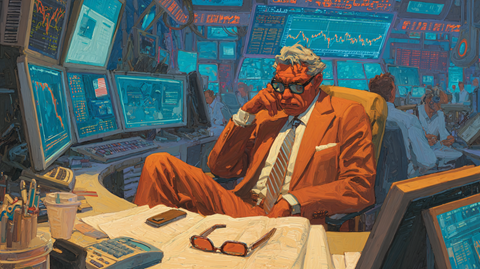
Do some traders have all the luck, or do they really know how to get what they want from the markets?
To be a successful trader or investor you need to be:
- Disciplined – The ability to follow a methodological set of rules based upon large samples of trades (i.e. The Mastermind Grid, OTA Picks, XLTs, etc.)
- Coachable – The open-mindedness to accept new ways to approach trading and investing especially if it goes against everything you previously believed as real. You must be willing to challenge your comfort zone and react more strategically. Remember, small adjustments can lead to big results.
- Willing to Take Action – The markets reward skill not knowledge. Without risk in life, there is no reward. Success is when your “I Will” is greater than (=>) your “I.Q.” Dreamers stay P.O.O.R. (Passing Over Opportunities Repeated), whiles Doers achieve financial independence.
Our job as successful traders and investors is to actively Observe, Strategize, Execute and Evaluate patterns on charts created by Banks, Institutions and retail investors.
Observe: Our job as traders and investors is to “never trade blindly! We must always be aware of what is going on in the world; economically, financially, and most importantly, on the charts; technically. For economic updates, you can either use Econoday.com or ForexFactory.com. Mastermind Students can use the Daily Market Overview to stay in touch with the big announcements happening that trading day.
Strategize: As traders and investors, we need to be less emotional and more strategic. The Core Strategy program was designed as a step-by-step process to help identify turning points in the markets created by Banks and Institutions to help increase the probability of stacking the odds in our favor, while also managing risk. Despite what you might think or hear, always remember the Charts don’t lie. Therefore, its important to always remember to “trade what you see, not what you think”.
Execute: Before ever putting any real capital at risk in the market, there is a step that separates disciplined traders from emotional novices; simulating trades. The real value of simulated trading isn’t just that it’s risk-free, it’s creating process and structure. It gives traders the space to test ideas, validate rules, and see how trading is managed across different market conditions. Strategies that look brilliant on paper often fall apart when volatility spikes or liquidity dries up. Simulated trading helps expose those weaknesses early, when the cost of being wrong is low, not high. Each mistake becomes a learning opportunity. Each adjustment strengthens confidence and improves performance over time.
To be a confident and consistent trader and investor you must be willing to take risks. Without risk, there is no reward. Trading success is rarely about knowledge; it’s about preparation, and when preparation becomes practice…practice becomes permanent. This is why “Timing and Patience are Everything” when it comes to executing your trades.
Evaluate: Like taking your car to the mechanic for a tune up, you should have regularly scheduled review of your trades and trade plan.
Unfortunately, this tends to be one of the most overlooked aspects of a novice trader and investor’s process, and this can lead to bad habits or worse. Evaluating your trades and overall trade plan helps you to stay disciplined while also learning from your mistakes. Learning how to identify your strengths and weaknesses early can help you identify what helps you continue to be successful with your trades.
Logging and reviewing your trades will help you to quickly determine whether you are meeting your financial/trading goals, and if not, what areas of weakness can you address on a short-term and long-term basis.
Reviewing your trades can provide immediate feedback helping to answer the question as to whether you are “doing this right?” . If you’re just starting out, this part of the process may seem challenging to you. How do you evaluate what you’re doing wrong if you don’t know what you’re doing wrong?! Fortunately, there are a few resources available for you at Trading Academy to use! The trade review sessions are particularly helpful in diagnosing what went right and what went wrong on your trades!
Using O.S.E.E. as part of your trading process creates discipline, accountability and clarity, and helps you make better trading and investing decisions which makes all the difference.
At the end of the day, this isn’t about luck, indicators, or finding the next “hot trade.” It’s about process.
The traders who win consistently aren’t guessing, they’re following a repeatable framework. They observe with intention, strategize with logic, execute with discipline, and evaluate with honesty. That’s where consistency is born.
O.S.E.E. isn’t just a checklist, it’s a filter. It strips out emotion, eliminates impulsive decisions, and forces you to operate like the institutions you’re competing against.
Because here’s the truth most people don’t want to hear: the market doesn’t reward effort… it rewards execution.
If you commit to this process, really commit, not halfway, you stop chasing trades and start letting trades come to you. You stop reacting and start anticipating. And over time, that shift is what separates those who struggle from those who build real, lasting results.
Simple doesn’t mean easy. But it does mean repeatable.
And in trading, repeatable is everything.