The Biggest SpaceX Opportunity Isn't SpaceX
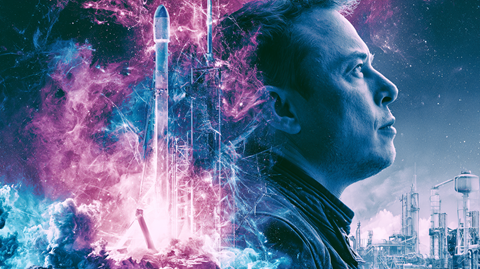
Every so often, Wall Street becomes captivated by a story so powerful that investors begin to believe the rules no longer apply.
The SpaceX IPO appeared to be one of those moments.
The headlines were already writing themselves. A revolutionary company. Elon Musk. Space exploration. Satellite communications. Artificial Intelligence. National security. The future of transportation. Depending on who you listen to, some analysts are already throwing around valuations that would make even the most aggressive technology investors blush.
And that's exactly why investors need to slow down.
We’ve seen this movie before.
In the late 1990s, investors were convinced that every company with ".com" in its name was destined for greatness. Billion-dollar valuations became commonplace. Capital flowed freely. Excitement replaced analysis. Then reality showed up.
Many of those companies disappeared.
The lesson wasn't that technology was bad. The lesson was that price matters.
That's why when I hear investors talking about SpaceX as if it can only go higher, my first question isn't, "How high can it go?"
It's, "What's already priced in?"
There's no question that SpaceX has transformed the aerospace industry. The company has accomplished things many believed were impossible. Its innovation, leadership, and vision are undeniable.
But great companies don't always make great investments at every price.
In fact, some of the most successful investments in history came not from buying the company everyone was talking about, but from identifying the businesses quietly supplying the tools, materials, and infrastructure behind the scenes.
That's where things get interesting.
While novice traders/investors focus on SpaceX ‘s ticker symbol the bigger opportunities may be found in the supply chain supporting the energy and infrastructure revolution that's emerging around artificial intelligence, data centers, and grid modernization.
The explosion of AI applications is creating an unprecedented demand for electricity. Massive data centers operate around the clock and consume enormous amounts of power. Utilities and grid operators are already warning about future capacity constraints.
In simple terms, we're rapidly approaching a point where demand may grow faster than the infrastructure needed to support it.
The following examples are for educational purposes only and should not be considered as recommendations.
Let's start with Albemarle (ALB).
Lithium remains one of the foundational components of large-scale battery storage systems. Whether it's electric vehicles, utility-scale batteries, or energy storage projects supporting the grid, lithium plays a critical role.
Next is STMicroelectronics (STM).
These specialized silicon carbide chips help manage high-voltage power conversion while generating less heat and improving efficiency. As battery systems become larger and energy demands increase, silicon carbide technology becomes increasingly important.
Then there's Powell Industries (POWL).
This is a company many investors have never heard of. Yet Powell builds critical electrical infrastructure including switchgear, control systems, and equipment needed to connect power generation and storage systems to the grid.
The reality is simple. A battery is only useful if you can safely connect it, manage it, and distribute the power it produces. That makes companies like Powell strategically important.
This is where investors often miss the bigger picture. Everyone wants to own the rocket ship, yet few traders/investors are spending the time researching the companies supplying the fuel, batteries, semiconductors, and electrical systems that make the launch possible.
History shows that some of the biggest winners emerge from these supporting industries.
Years ago, Nvidia wasn't the household name it is today. It quietly built technology that eventually became essential to multiple industries. Most investors ignored it until the story became obvious. The next great opportunity may be developing in a similar fashion today.
Does that mean SpaceX won't be successful?
Not at all.
But successful companies and successful investments aren't always the same thing.
As professional traders and investors, our job isn't to chase excitement. Our job is to identify opportunity before it becomes obvious to everyone else.
The SpaceX IPO will undoubtedly generate headlines. It will attract attention. It will create volatility. It may even create extraordinary opportunities.
Just remember that sometimes the most profitable investment isn't the company standing in the spotlight. Sometimes it's the companies quietly supplying the stage.
As always, do your homework, understand the risks, and focus on value rather than excitement.