You Can Lose Money and Still Be a Great Trader
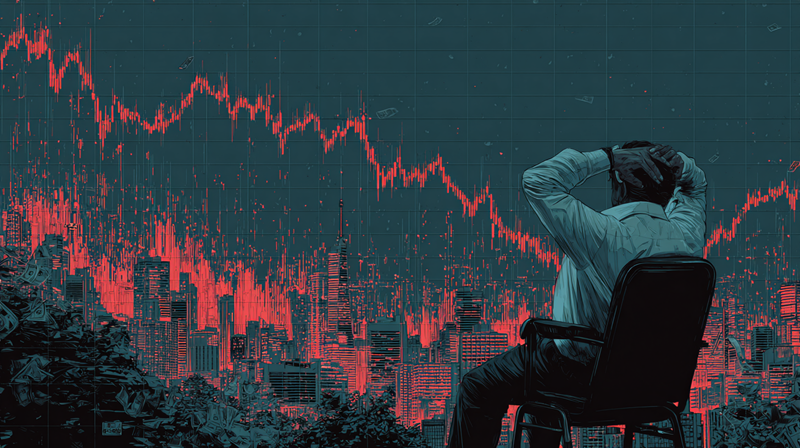
In trading, as in poker, decision-making under uncertainty is the name of the game. Each trade is a bet, an educated guess based on available information, a defined setup, and a structured process. And yet, many traders fall into the dangerous trap of evaluating the quality of their decisions solely based on the outcome. This is one of the central ideas explored in Thinking in Bets by former professional poker player Annie Duke.
Duke argues that "resulting" (the tendency to judge a decision by its outcome) can lead us to the wrong conclusions and weaken our decision-making over time. For traders, this misalignment between outcome and process can be fatal
The Illusion of a “Good Trade” and “Bad Trade”
Many traders refer to wins as "good trades" and losses as "bad trades." But in reality, a trade’s quality should be evaluated based on the soundness of the analysis and execution, not the result. A “bad” trade can lead to a profit, and a “good” trade can still result in a loss—simply because markets are probabilistic and uncertain.
This idea is foundational to developing a professional trading mindset.
“A great decision is the result of a good process, and that process must include an attempt to accurately represent our own state of knowledge.”
— Annie Duke, Thinking in Bets (2018)
When traders tie their emotional reactions to results instead of process, they start making random adjustments—changing strategies, abandoning systems, or overreacting to single events. This leads to inconsistency, which is the real enemy of progress.
The Process-Outcome Disconnect
Imagine placing a trade with a well-defined edge: your setup aligns across multiple timeframes, risk is controlled, and you follow your entry and exit rules. But the trade hits your stop-loss due to unexpected market news. Was that a bad trade?
If your focus is on outcomes, you might say yes. But from a process standpoint, it was a high-quality decision. Over a large sample of similar setups, the edge will play out. Changing your strategy based on a single result would be like a poker player folding pocket aces next time because they lost with them once.
This distinction is critical. In trading, randomness and variance play a large role. A single outcome says almost nothing. What matters is whether the trade was made with discipline, risk control, and within a well-tested system.
Hindsight Bias: The Great Deceiver
Hindsight bias is the psychological tendency to believe, after the fact, that an event was more predictable than it actually was. It’s what causes us to say, “I knew that was going to happen,” even when we didn’t act on that belief.
In trading, hindsight bias can be incredibly destructive:
- It creates false narratives about what we "should have" done.
- It makes losing trades seem stupid and winning trades seem inevitable.
- It encourages overfitting and leads traders to constantly change their systems after every loss.
This reactionary behavior undermines one of the most important pillars of trading success: consistency.
The Cardinal Rule: Consistency Over Brilliance
It’s tempting to seek the “perfect” setup, the “perfect” indicator, or the “perfect” timing. But what professional traders understand is that long-term profitability comes from consistently executing a process with positive expectancy, not from being right all the time.
Duke reinforces this too:
“We are not wrong just because things didn’t work out. And we’re not right just because they did.”
— Annie Duke, Thinking in Bets
The moment a trader starts changing their system after every drawdown, they abandon the statistical edge they were building. They start chasing outcomes instead of executing a method. This leads to inconsistency, which over time almost guarantees underperformance.
Building a Process-Oriented Trading Mindset
Here are key practices that traders can use to develop better decision-making habits:
- Separate Decision from Outcome
After every trade, ask: Did I follow my process? Was the trade based on my plan? Avoid language like “good” or “bad” and instead use “well-executed” or “poorly-executed.” - Use a Trade Journal Focused on Process
Track not just entries and exits, but also your pre-trade reasoning, emotions, and whether rules were followed. This will help identify patterns in behavior—not just outcomes. - Review Losses Without Rewriting History
A losing trade doesn’t need to be "fixed." If the setup is valid and the execution was disciplined, log it and move on. - Avoid Post-Mortem Overfitting
Don’t change a system after a few losses unless backed by data. Review performance over large sample sizes. - Define Success by Execution, Not Equity Curve
Over short periods, results will vary. Judge yourself based on how well you execute your process.
Conclusion
Thinking in Bets teaches us that the world is messy, uncertain, and full of probabilities—not certainties. In trading, that lesson is vital. Successful traders don't obsess over being right; they obsess over doing the right thing, over and over again.
By decoupling outcomes from process, resisting hindsight bias, and maintaining consistency in execution, traders can build the kind of discipline that survives not just one trade—but hundreds. In the end, it’s not the brilliance of a single trade that determines success. It’s the integrity of the process behind every trade.