The Psychology of Money: Could You Be Your Own Biggest Financial Obstacle?
Over the past couple of months, I've shared some thoughts and concepts that I believe can make a real difference in how we approach trading and investing. We started with the book, Atomic Habits, exploring how small changes in our daily behaviors can lead to meaningful results over time. Then we looked at DISC behavioral profiles and how our personalities influence the decisions we make, particularly when money is involved.
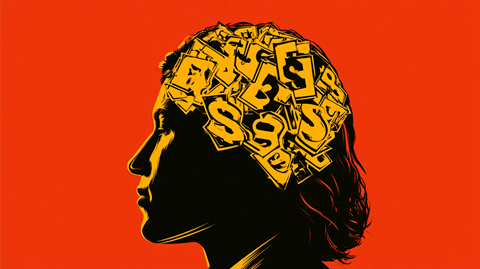
For this third and final article, I want to take our conversation one step further and discuss something we probably don't spend nearly enough time thinking about: our relationship with money.
I recently revisited Morgan Housel's book, The Psychology of Money, and one of his central messages really stuck with me. Being successful with money isn't necessarily about how smart you are or how much financial knowledge you've accumulated. It's about how you behave.
Now, think about that for a minute.
As traders and investors, we spend a tremendous amount of time learning the technical side of the business. We study charts, analyze companies, identify opportunities, develop trading plans, and work on managing risk. All important stuff, no question about it.
But here's something I've often wondered. Why is it that two people can learn the exact same trading strategy, follow the same markets, have access to the same information, and still produce dramatically different financial results?
I would argue that much of the answer has very little to do with the strategy itself.
It has to do with the person making the decisions.
Whether we realize it or not, each of us has developed a relationship with money over the course of our lives. Maybe you grew up in a household where money was always tight. Perhaps your parents constantly worried about paying the bills. Or maybe money was never really discussed, except when there wasn't enough of it.
Those experiences don't simply disappear when we open a brokerage account.
They follow us right into our trading and investing decisions.
For example, have you ever closed a profitable trade too early because you were afraid of giving back what you'd made? Or held onto a losing investment far longer than you should have because you couldn't bring yourself to admit you were wrong?
How about taking a trade you knew you shouldn't have taken because you wanted to make back money you had lost earlier?
Sound familiar?
These aren't necessarily failures in technical knowledge. They're examples of how our emotions, beliefs, and previous experiences with money can interfere with otherwise sound decision-making.
One of the lessons I particularly appreciate from Housel is the distinction between making money and keeping money.
Making money often requires taking calculated risks, having confidence in your decisions, and being willing to act when opportunities present themselves. Keeping money requires something a little different: patience, humility, discipline, and knowing when enough is enough.
I think that's an important distinction for anyone involved in the financial markets.
We've all heard stories about traders who made extraordinary profits, only to give much of it back because they became overconfident or started taking unnecessary risks. Investors aren't immune either. Chasing the latest hot stock or trying to outperform everyone else can easily distract us from why we started investing in the first place.
And that brings me to another point.
What are we actually trying to accomplish with our money?
Is it financial independence? A comfortable retirement? More time with our families? The freedom to make choices without constantly worrying about how we're going to pay for them?
Or have we somehow turned trading and investing into a competition to see who can make the most money?
Housel challenges us to think about what having enough really means. I believe that's a question worth asking because, without a clear understanding of our financial goals, it's awfully easy to keep moving the finish line.
A bigger account balance doesn't automatically translate into a better life.
As I bring this three-part series to a close, I hope you'll recognize how these ideas connect.
Atomic Habits reminds us that what we do consistently matters. DISC helps us understand why we tend to behave the way we do. And The Psychology of Money encourages us to examine the beliefs and emotions that influence our financial decisions, sometimes without our even knowing it.
Here's what I'd encourage you to do. Before spending another hour looking for the perfect trading setup or the next great investment, spend a little time examining your own relationship with money.
Ask yourself whether your financial decisions are moving you closer to your goals or whether some of your long-held beliefs and behaviors might actually be getting in the way.
You may discover that improving your financial results doesn't always require another indicator, a better strategy, or more market knowledge.
Sometimes, the most important work we can do as traders and investors has nothing to do with the markets at all.
It starts with understanding our relationship with money.