The News Edge: Why Retail Gets Burned While Pros Cash In
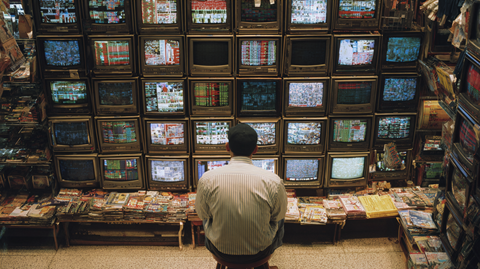
Let’s be clear: financial news is not designed to help the average retail trader, it’s designed to move the herd. And when the herd moves, it typically moves in the wrong direction.
Meanwhile, professional traders, those who’ve studied the markets, who use a rules-based strategies, and who practice good risk management, are not reacting to the headlines. They’re using the market chaos to create opportunity.
Here’s why retail traders typically get blindsided, and how the pros turn news into opportunity.
The News Is Not Your Friend. It’s a Setup.
Most retail traders don’t realize they’re being manipulated. Financial news is structured to capture attention, not deliver a trading edge. Let’s unpack the traps:
1. News Reacts, It Doesn’t Predict
By the time CNBC flashes “Market Tanks on Economic Data,” the institutions have already acted. They’ve positioned ahead of the event. Retail traders, reacting in real-time, often end up selling at support say $100, just as the pros are stepping in to buy.
2. It’s Designed to Trigger Emotion
The media thrives on fear and greed, two forces that destroy retail performance. A headline about a tech CEO resigning might trigger panic selling around $50. But professionals, recognizing it as a demand zone and understanding the company’s fundamentals, are quietly accumulating.
3. It Lacks Market Context
Headlines are narrow by design. They spotlight one event without connecting the bigger picture. A story on rising interest rates might sound bearish, but pros know it could spark a rotation into financials. Instead of reacting, they read the price action and track where institutions are moving money.
4. It’s Often a Tool of Manipulation
Institutions understand how to use the media. Whether it’s leaking negative news before buying or hyping good news before selling, the goal is to shake out retail traders. Those trained to properly time the markets can spot the manipulation, and take the other side of the trade.
How Pros Flip the Script
Professional traders don't just avoid the traps, they turn them into opportunities:
• They Think Contrarian, By Design
Retail traders follow the crowd. Bad news? They sell. Great earnings? They chase. Pros typically do the opposite. When a stock like XYZ drops on panic headlines, pros look to enter, right where institutions are buying. The goal is simple: follow the footprints of the banks and institutions, not the noise of the crowd.
• They Trust Price, Not Hype
Professional traders don’t need headlines, they trust the charts. Price tells the truth. Whether it's inflation fears or a rate hike, the chart reveals where banks and institutions are selling and buying as they leave clues.
• Risk Management Comes First
Retail traders often enter without a plan, then wonder why they’re losing. Pros define the trade before they enter. For instance, they might buy XYZ at $52, set a stop at $50, and target $56. That’s a 3:1 setup. When volatility hits, they don’t flinch. Trades are defined, and the risk is controlled.
• They Track Institutional Order Flow
Markets move on institutional capital, not headlines. Pros use technical tools to locate where banks and institutions are buying and selling through the laws of supply and demand. While retail traders chase a stock up to $75 after a hot report, professionals wait for the pullback—entering at a level where banks and institutions are likely buying.
The Bottom Line
Financial news is one of the most effective tools for separating retail traders from their money. It's delayed, emotionally charged, lacking in context, and often manipulated.
Professional traders don’t consume the news. They use it.
They trade against the crowd.
They trust price action over hype.
They manage risk with discipline.
They follow institutional footprints, not headlines.
Want to trade like a professional?
At Trading Academy, our mission is to teach you how to think, plan, and trade like the institutions. We arm traders and investors the education, skill-building, and tools they need to stop chasing news, and start trading with confidence and clarity.