Role of the Federal Reserve; Understanding Fiscal vs Monetary Policy
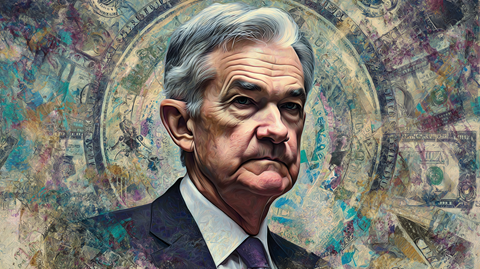
Since its inception in 1913, the Federal Reserve has been an organization little understood by the general public, yet few corporations impact our lives as much as “The Fed”. The Federal Reserve was created by an act of Congress, and it is truly unique. It is neither a government agency, or part of the US Government, but rather a corporation with shareholders owning stock in the “the Fed”.
When it was established, the Fed was given 3 primary responsibilities:
- Regulate and supervise Federally Chartered Banks
- Facilitate the transfer of money in the US Economy
- Establish and implement the nation’s Monetary Policy
It is this 3rd responsibility which affects the marketplace, our interest rate policies, and the global capital markets. Within the Fed, that Monetary policy responsibility has been abdicated to a committee within the Fed called the Federal Open Market Committee (FOMC). In the late 1970’s, with inflation rising and the economy teetering on recession, Congress expressed frustration with the independent nature of the Fed. As a result, they passed the Full Employment Act of 1978. (referred to as the “Humphry Hawkens Act”), This legislation explicitly instructs the Fed to strive toward two specific goals: full employment, and growth in production with price stability
To understand this, let’s first clarify Fiscal Policy, which the government establishes, vs Monetary Policy, which the Federal Reserve establishes.
Fiscal Policy: Fiscal policy uses tax policies, tariff policies and government spending to influence macroeconomic conditions, including employment and inflation. This is managed and implemented by the Executive and Legislative branches of our government. It is important to note that since 1955, our elected officials have grossly overspent, and that overspending has resulted in a cumulative amount of debt that now excepts $31 Trillion. The interest rates the government must pay to borrow this growing obligation now exceeds $1 Trillion. Each of the last 3 years alone, our government has annually overspent by more than $1.5 trillion
Monetary Policy: The Federal Reserve establishes and implements monetary policy in the United States to meet its dual mandate from Congress. Strategically, it involves a growing number of financial tools, such as adjusting certain short-term interest rates, adding and removing money from the US economy, and changing bank reserve requirements. It is important to note, that this segregation of responsibilities (fiscal vs monetary policy), is by design not oversight.
How the Fed Affects the Economy and the Markets
The Fed has a number of economic tools to implement its policies. In fact, during the great recession of 2008, and again during the pandemic in 2021, the Fed introduced a series of new initiatives and tools, never been tried, (referred to as Quantitative Easing, and Quantitative Tapering).
The most traditional tool our Fed uses is interest rate policy, and the interest rate the Fed most often “manipulates” is the Federal Funds (FF) rate. The FF rate is the rate banks borrow and lend from each other. Banks borrow for one day from each other, and the rate at which they conduct this activity is called the Fed Funds Rate. The Fed controls this rate. Simply put, when the Fed wants to encourage growth in the economy, they lower the FF rate, making it cheaper for the banks to borrow money, acting as a stimulus. Conversely, when they worry about the economy overheating, or if inflation is taking root, they raise the FF rate, making it more expensive to borrow money. Other markets than the bond market react to this activity as well. Traditionally, equities respond well to rate cuts, as the cost of corporations borrowing money will also drop, and the resulting improved economy should also benefit equities. Likewise, a rise in the FF rate, and the resulting slowdown of the economy does not treat equities particularly well. Additionally, the value of the US dollar slides traditionally when the Fed cuts rates, as the interest rate environment here in the US is slightly less attractive. Conversely the Fed raising the FF rate strengthens the US dollar, making rates more attractive.
Another important rate that the Fed controls is the Discount rate. This is the rate that banks can borrow money directly from the Fed. Truthfully, this is how we get the safety of our domestic banking system. If banks have an excessive need for cash, they can borrow it directly from the Fed. As the lender of last resort, the fed provides a safety net to these federal banks. Like with the FF rate, when the Fed is looking to stimulate the economy, they lower the discount rate, and when they need to address growing inflation or an overheated economy, they raise that rate.
In 2010, Ben Bernanke, then Chairman of the FOMC, introduced yet another economic tool to affect the economy, called Quantitative Easing (QE). Simply put, in initiating QE, our central bank created more dollars and used those new dollars to go out in the market and start buying long maturity treasury notes and bonds. This resulted in two important impacts to the market: 1) The fed was flooding money into the economy in hopes that money would provide a stimulus to the market, and 2), by buying so many treasuries the Fed was intentionally, driving up prices, and driving down yields, affecting long term interest rates as well for the first time. Chairman Powell, reintroduced this new tool in 2022 in response to the Pandemic.
Here’s what it ultimately comes down to: if you are participating in the financial markets and you don’t truly understand how the Federal Reserve operates, how the bond market functions, and how interest rates ripple through every other asset class, you are operating at a disadvantage. The Fed is not just a headline generator, it is the primary driver of liquidity, capital flows, and risk appetite across the globe. When interest rates shift, they don’t just affect borrowing costs; they reprice equities, influence currency valuations, impact commodities, and alter investor behavior at every level.
The bond market often acts as the true “canary in the coal mine,” signaling changes in growth expectations, inflation pressures, and financial stress long before those signals appear in stock charts or media narratives. Understanding how yields move, how the yield curve reflects economic conditions, and how institutional capital responds to changes in monetary policy is essential for anyone who wants to move beyond reacting to markets and start anticipating them. I would encourage you to join me in my focus course titled “Canary in a Coal Mine” class at Trading Academy. We break down the mechanics of the bond market and interest rate movements in a way that empowers you to interpret the signals professionals watch every day. If you want to understand what is truly driving the markets, and position yourself accordingly, this is knowledge you cannot afford to ignore.